


A basement renovation can look effortless at first. You picture a finished family room, a home office, an extra bedroom, or simply a cleaner, more useful space. Then the contractor opens a wall, moisture shows up near the foundation, the ceiling turns out to be lower than expected, or an old pipe gets in the way of the layout.
This is where basement projects in New York City can seem frustrating. Many basements are part of older buildings, and what sits behind the walls or beneath the floor can have just as much bearing on the project as the design itself.
A successful basement renovation in NYC is not about avoiding every surprise. It is about knowing which issues deserve attention before they turn into disruptive changes.
Start With the Basement You Actually Have
It is easy to plan around the finished room you want. But before picking flooring, lighting, or wall colors, take a close look at the current space.
Older Bronx properties, in particular, may have a combination of aging plumbing, uneven concrete floors, exposed utility lines, and signs of previous water intrusion. Some shortcomings are obvious; others only become noticeable once renovation work begins.
A proper assessment should look at:
- Moisture and water entry: Check for damp walls, musty odors, staining, and signs of water collecting after heavy rain.
- Ceiling height: Existing beams, pipes, and ductwork can reduce usable headroom.
- Electrical and plumbing systems: Older installations may need cleanup before new rooms or fixtures are added.
- Foundation and floor condition: Cracks, uneven surfaces, and deteriorating materials should be appraised before they are covered.
These details may not be the most exciting part of the renovation, but they have a direct effect on what the basement can realistically become.
Don’t Let a Beautiful Finish Hide a Bigger Problem
One common mistake is ignoring moisture as a cosmetic issue. A damp corner gets secured with fresh drywall, an old floor receives a new finish, and the room looks better for a while. Unfortunately, the source of the moisture may still be there.
Basements sit below ground level, so water pressure, poor exterior drainage, foundation cracks, and inadequate waterproofing can all contribute to recurring problems. Installing attractive finishes before addressing the cause can mean sacrificing those same materials later.
The order of work matters. If water is entering through the foundation or collecting around the property, that needs to be investigated before the renovation moves ahead. Depending on the conditions, the solution may look like drainage improvements, foundation repairs, waterproofing, or better moisture management.
A basement should feel comfortable after the work is complete, not just look finished on the day the project wraps up.
Make the Layout Work Around Real Life
A basement does not have to become another version of the living room upstairs. Its best use depends on the building, the available space, and how the household actually lives.
A home office may call for better lighting, sound control, and reliable electrical access. A family room might require flexible storage and enough clearance around existing columns. A laundry area must have practical plumbing access and ventilation.
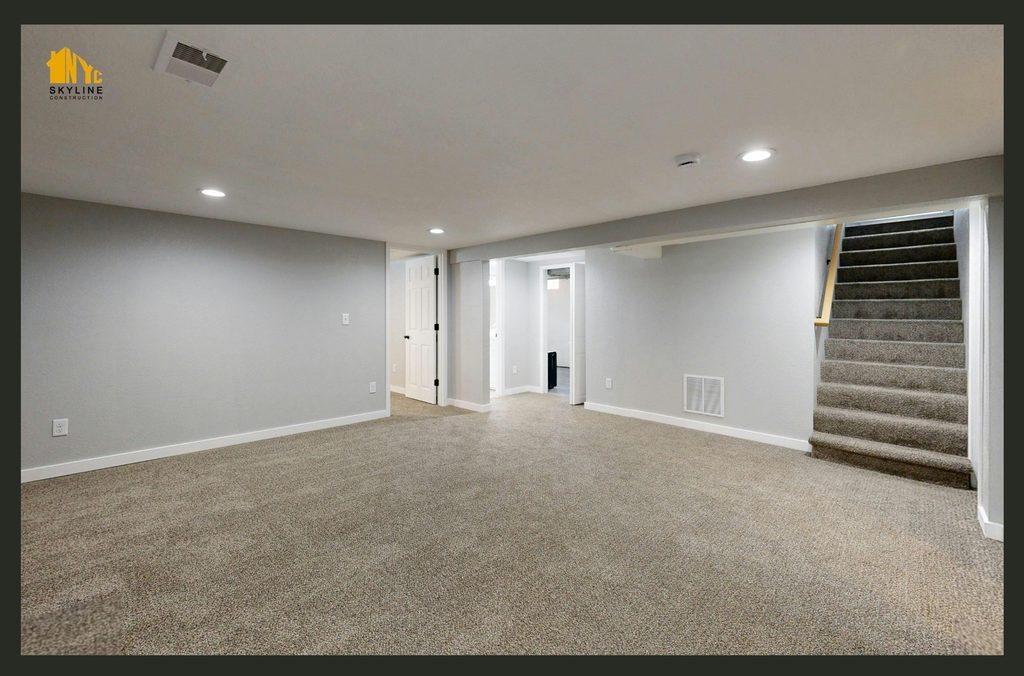
During a basement renovation in NYC, layout plans also need to account for stairs, mechanical equipment, utility access, and required clearances. Moving everything out of sight may create a cleaner appearance, but service panels, shut-off valves, and essential equipment must remain accessible.
There is also a difference between making a basement look like living space and legally converting it into a dwelling. Bedrooms, bathrooms, and separate apartments can satisfy specific building, fire-safety, ventilation, ceiling-height, and permitting requirements. Homeowners should verify the applicable rules before planning that type of conversion.
Why the Right Contractor Makes a Difference
Basement work normally brings several trades together in a relatively small area. Waterproofing, framing, electrical work, plumbing, insulation, and finishing all affect one another.
This is why homeowners comparing Bronx general contractors should look far beyond photographs of completed rooms. Ask how the contractor evaluates existing conditions, manages concealed problems, coordinates different trades, and communicates when the original plan needs to change.
A knowledgeable general contractor in Bronx should also point out when a proposed design conflicts with the building’s existing systems or applicable requirements. That conversation is much easier to have before materials are installed than after a finished wall has to be opened again.
NYC Skyline Construction Looks Beyond the Finished Room
At NYC Skyline Construction, the more revealing part of a basement project is usually what the finished photographs will never show. A clean ceiling may conceal a complicated network of pipes. A new floor may sit above an area that once had moisture problems. A carefully planned room may hinge on leaving access to equipment that cannot simply be moved.
These are the decisions that establish how a basement performs long after the renovation is over. The finished appearance matters, but so does all the work that remains behind it.
For NYC properties, where older construction and later alterations often meet in the same building, paying closer attention to those hidden relationships can make the difference between a room that merely looks complete and one that works as intended.
A Better Basement Starts With Fewer Assumptions
The simplest way to make a basement renovation unnecessarily stressful is to assume the space will function like any other room in the house. It has different conditions, different limitations, and sometimes a few surprises waiting behind the walls.
Give the existing structure proper attention, resolve moisture concerns early, plan around utilities, and confirm what the intended use requires. With those questions addressed, basement renovation in NYC might be much more manageable, and the refurbished space has a better chance of serving the household for years to come.